Project

Goon Squad Cinematic Game Trailer Case Study

Description

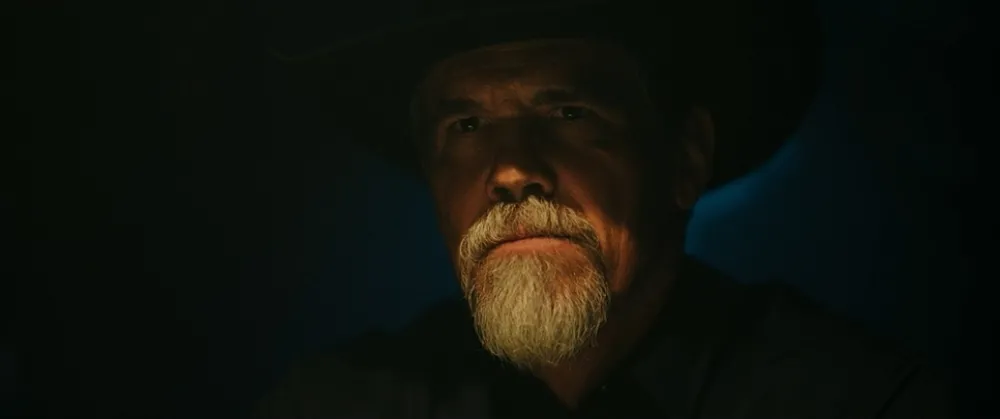
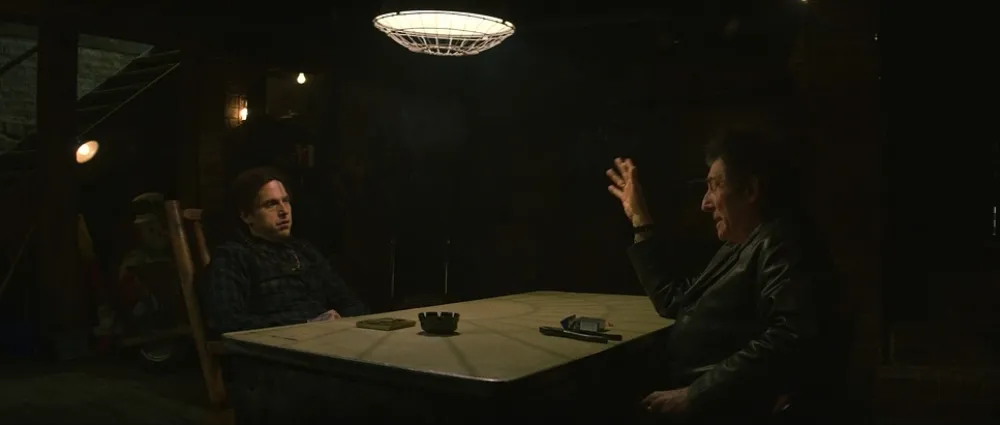
We were given an interesting task: to create a cinematic video for the game Goon Squad, while maintaining the current art style. On top of that, it had to be done in collaboration with famous Bored Apes characters. The client provided us with a text description of their ideas and renders of characters from the Goon Squad game. We had to turn this into a cinematic. Resolution - 4K Framerate - 60 FPS

Credits
Client
Blowfish Studios
Special Projects Director
Michael Bolden
Production
m1x Studio
Director:
Alex Hrzhehorzhevskyi
Producer
Alex Hrzhehorzhevskyi
Art Director/Supervisor
Rafael Blanco

Character development

Art Style

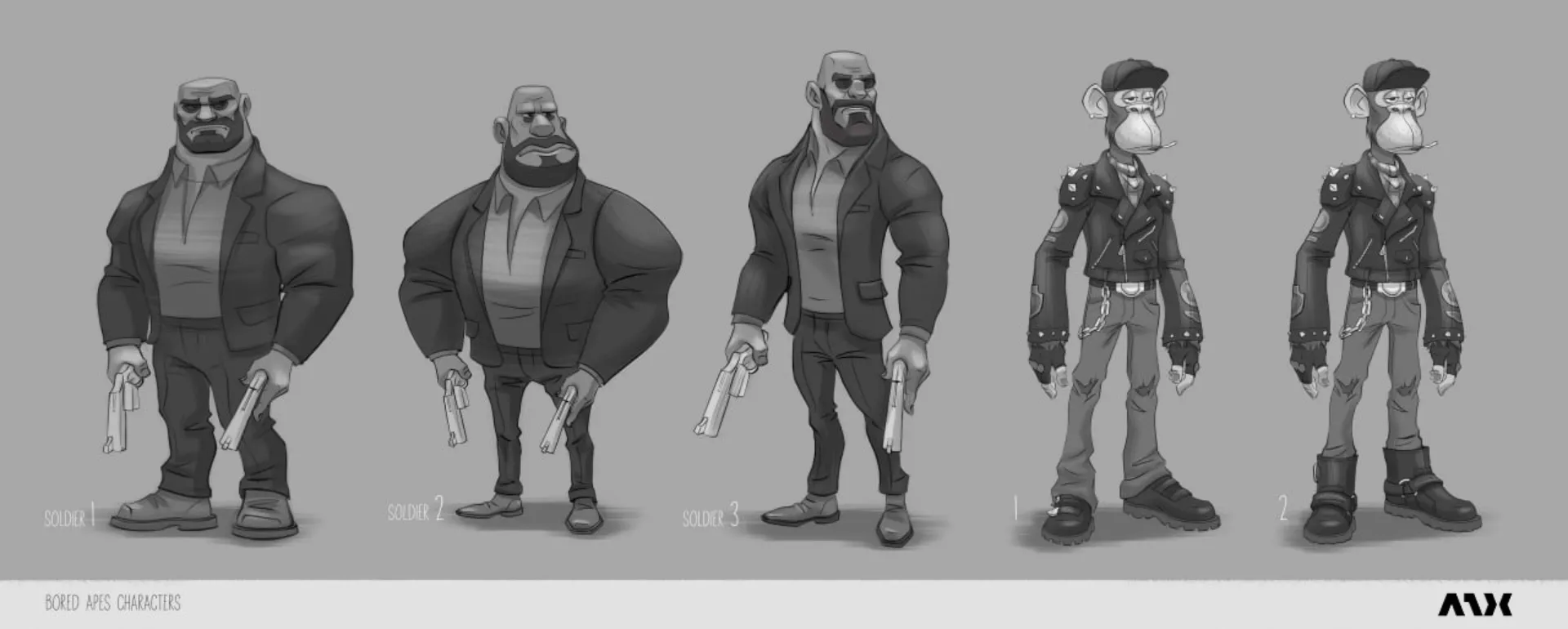
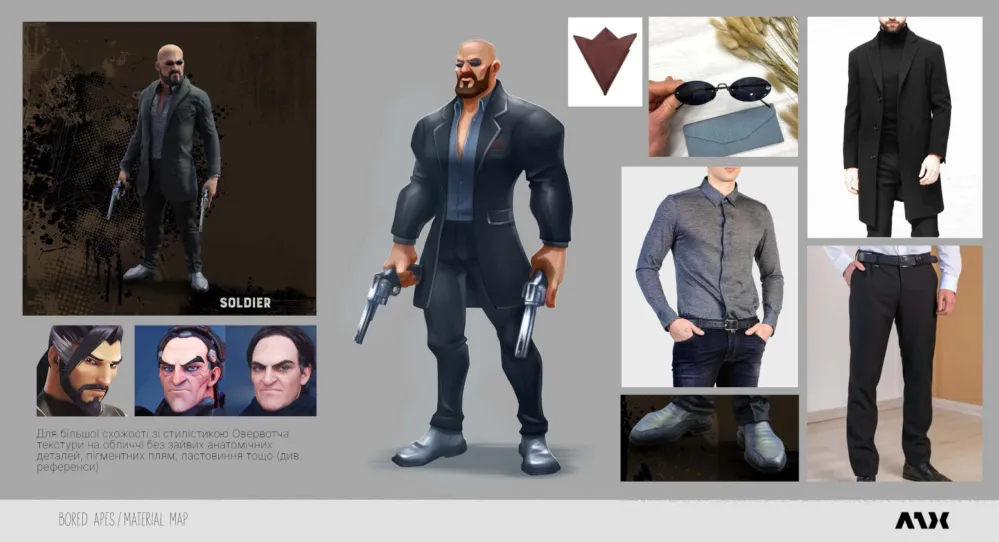
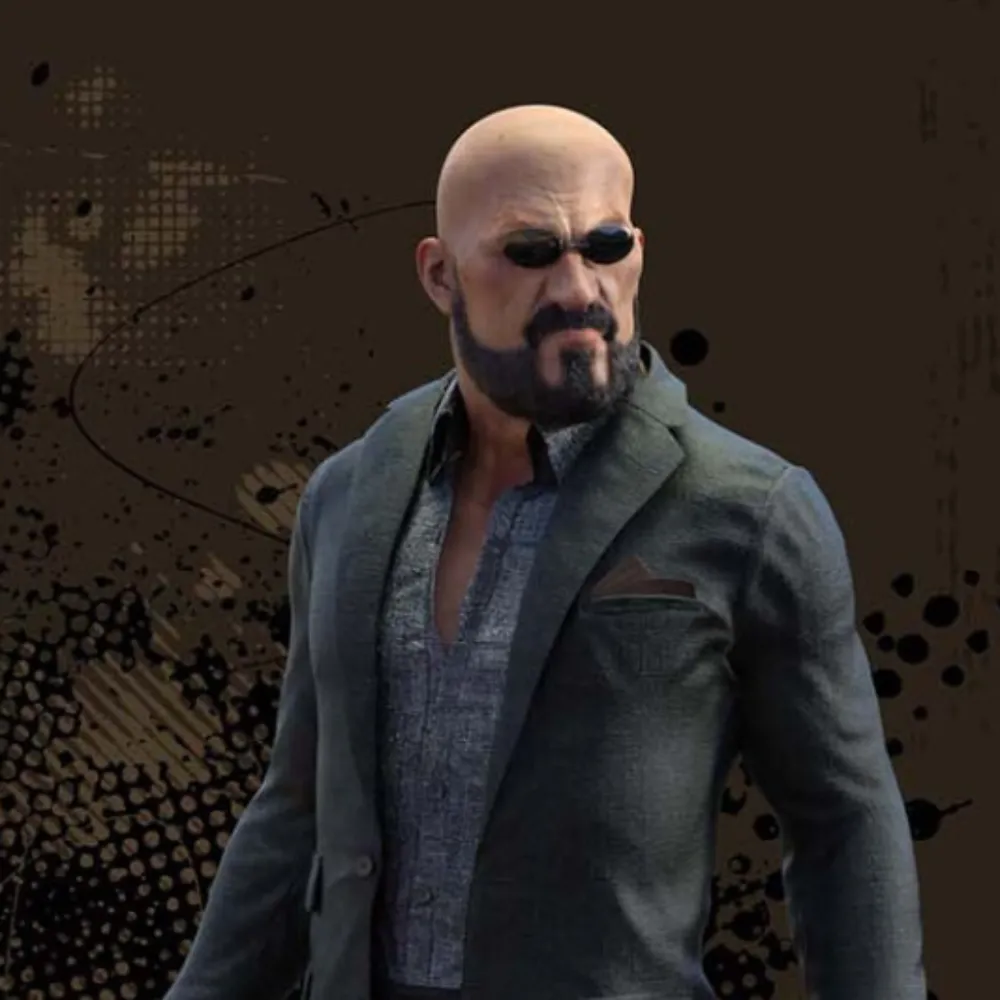
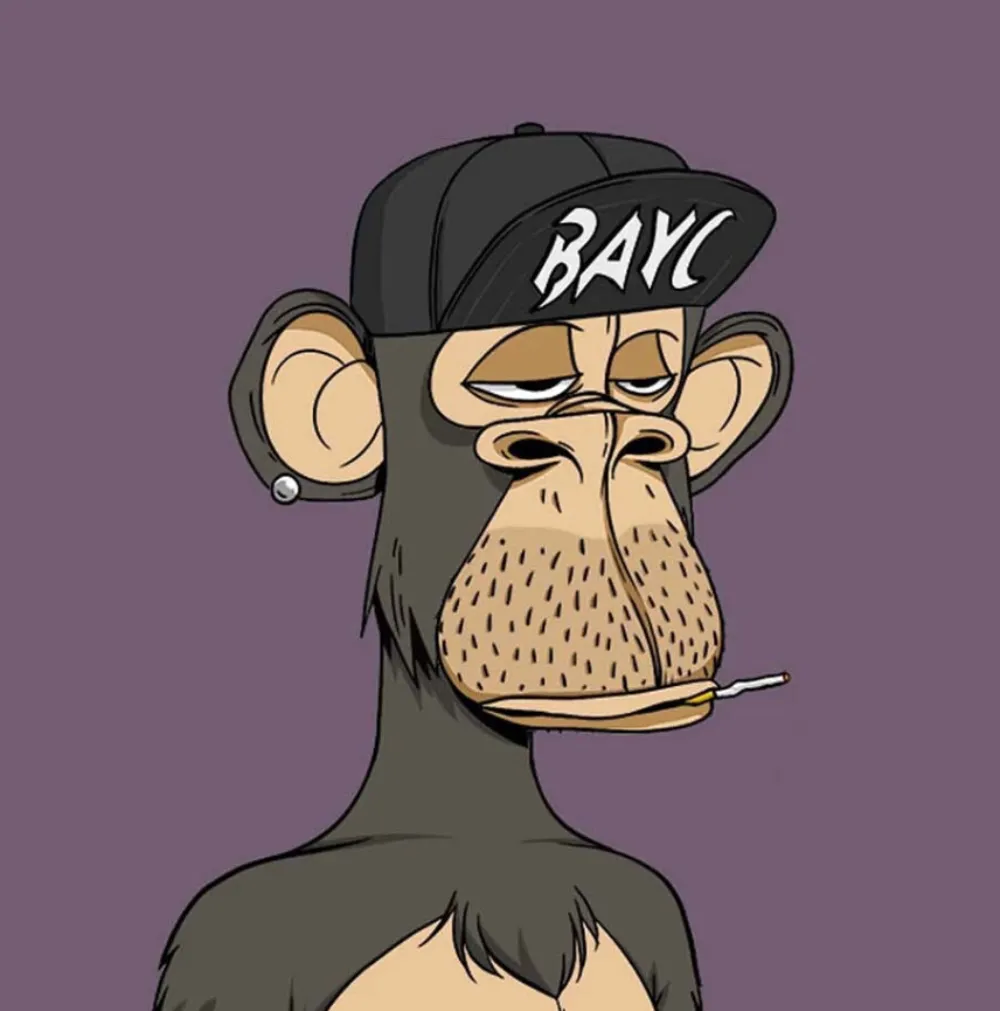
The first thing we did was define the art style. Goon Squad and Bored Apes were done in different styles and our job was to combine them. We gave the client several options for how the Goon Squad characters could look in the Bored Apes style.
Soldier
Bored ape
Photo 2023 11 29 15 58 31
Styling options presented to the client
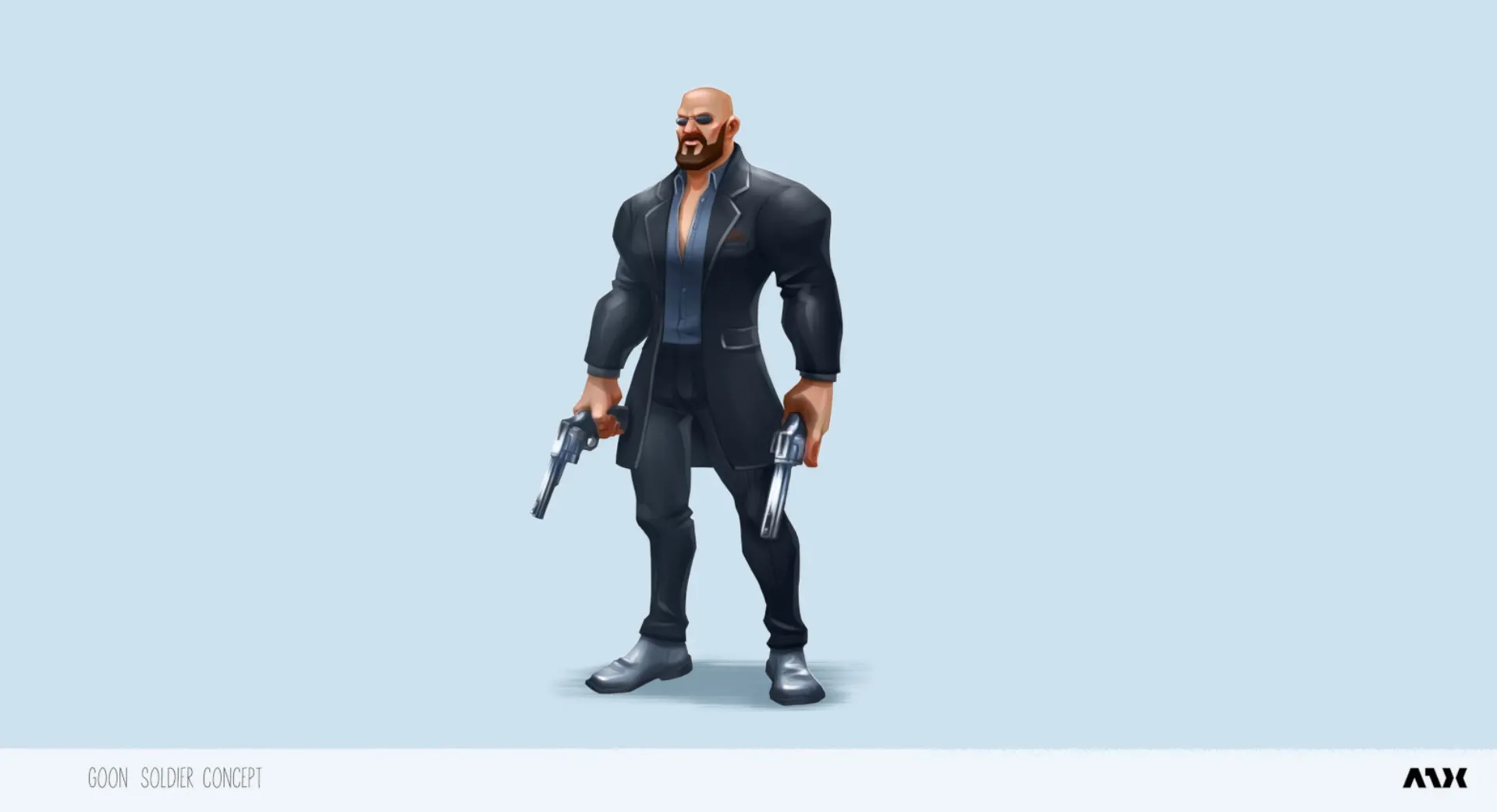
Goon boss art
A styling option that the client has approved

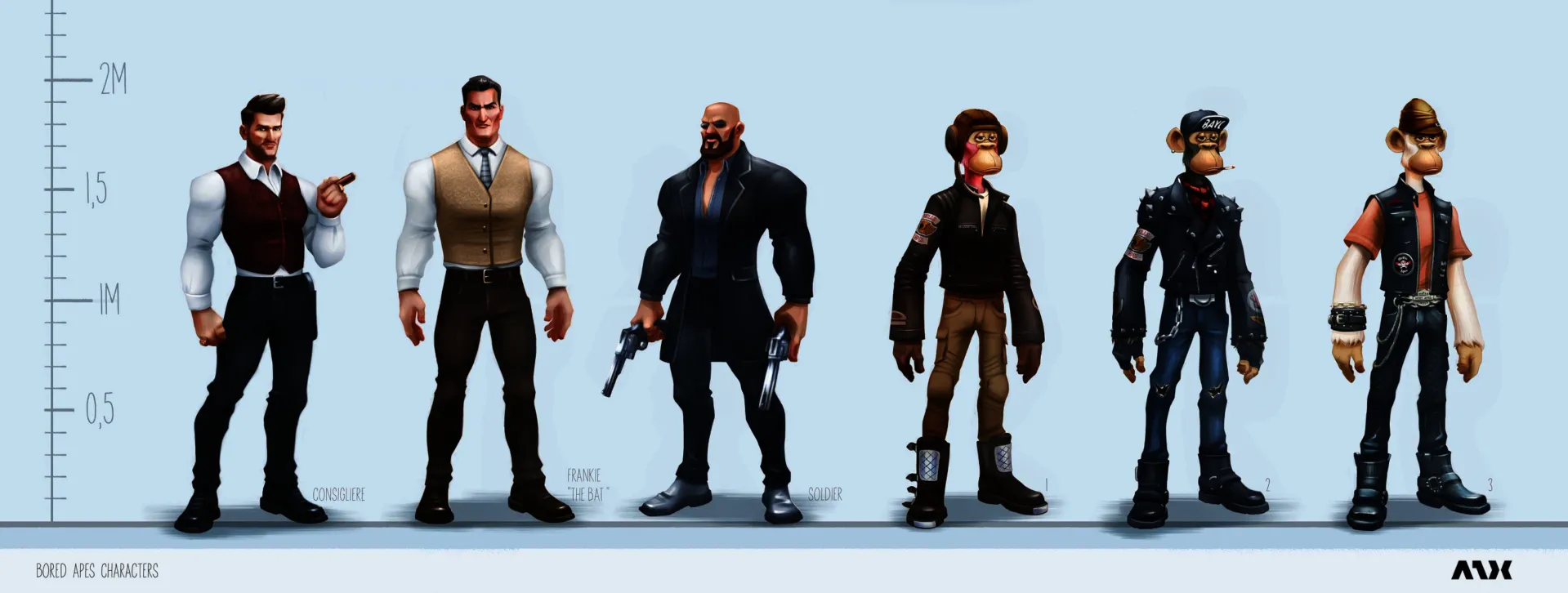
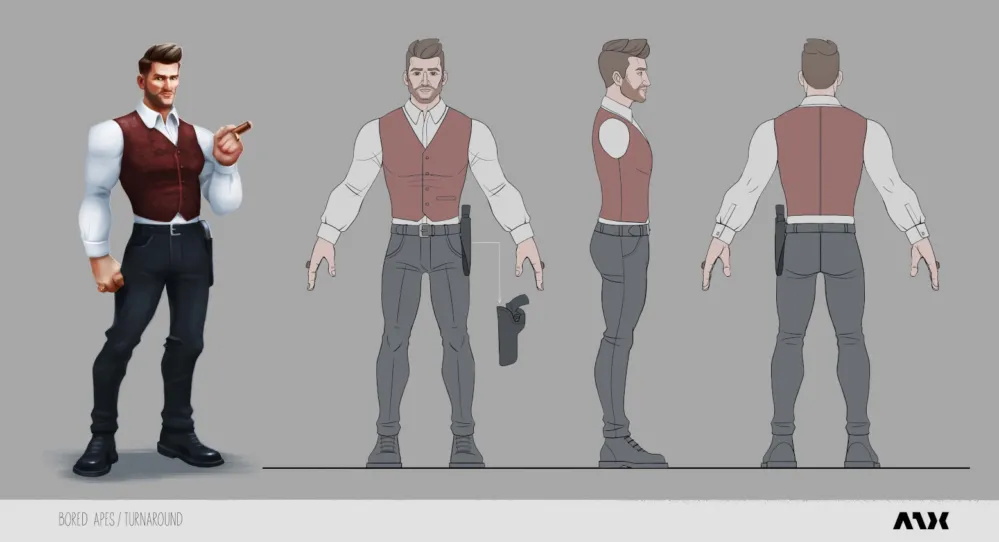
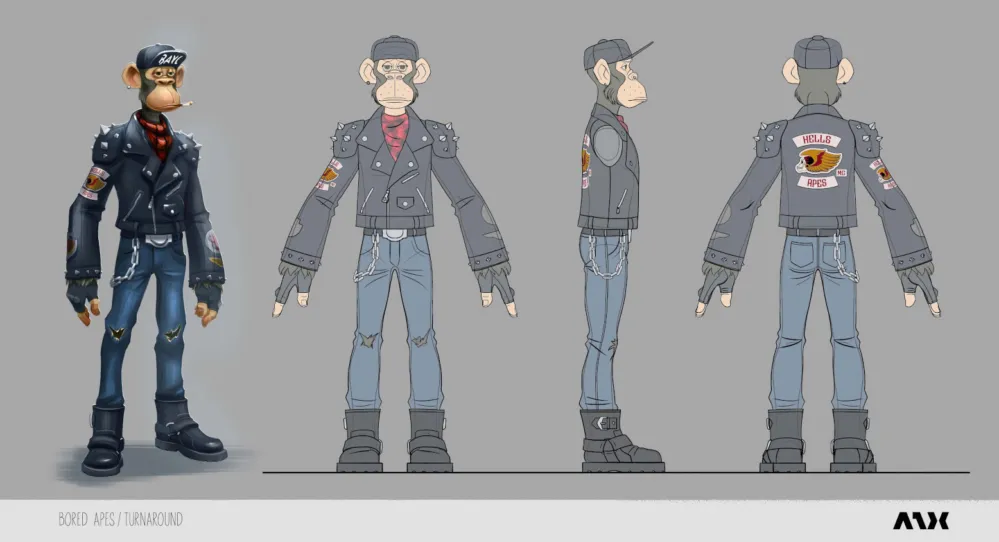
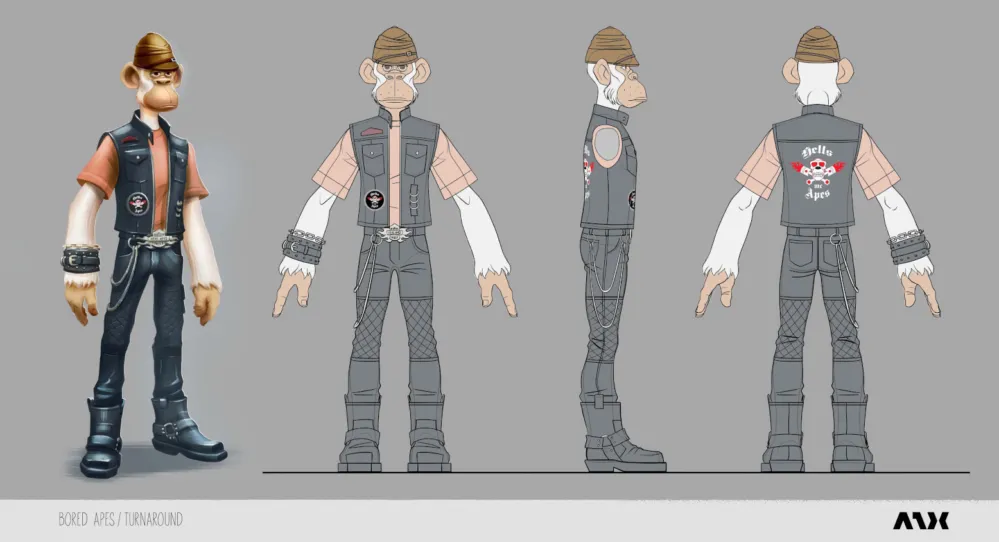
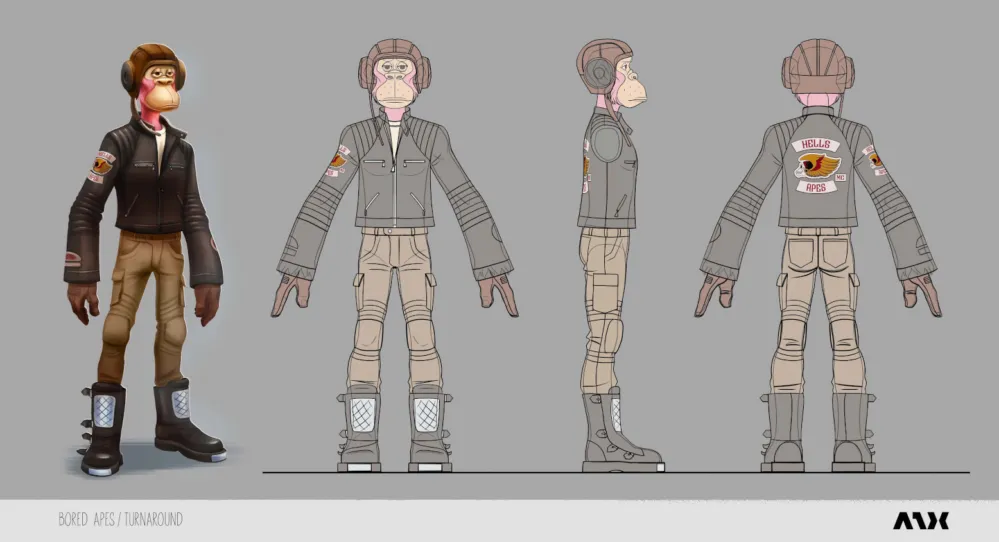
Once the client approved the style of the main character, we went on to develop the other characters. In total there were six characters in the video.

Concept

Bored Apes characters height ruler v1
Approved character concepts

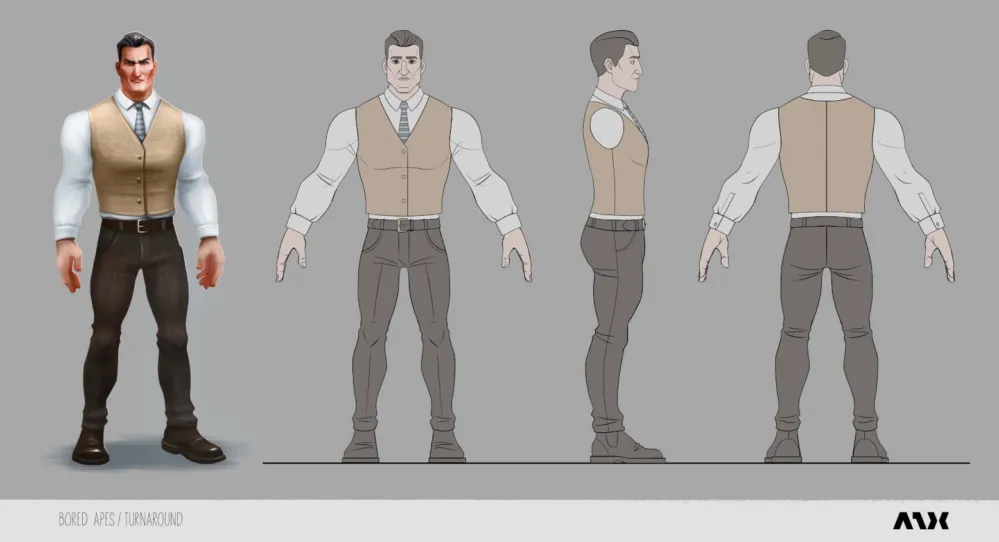
Characters turnaround

Goon boss orto v001
Test Subheader
Goon soldier km v001
Goon cons orto v001
Monkey cap orto v001
Monkey forage orto v001
Monkey pilot orto v001

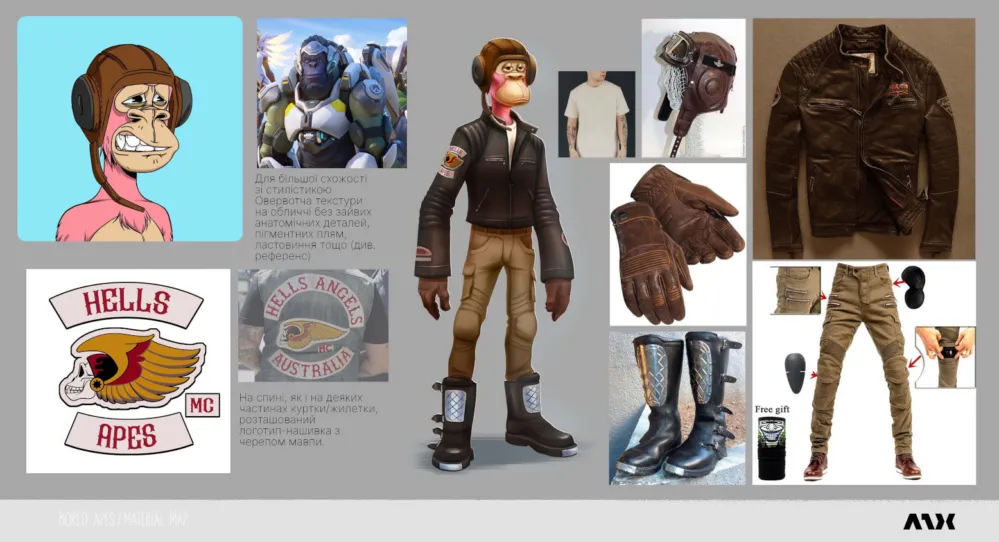
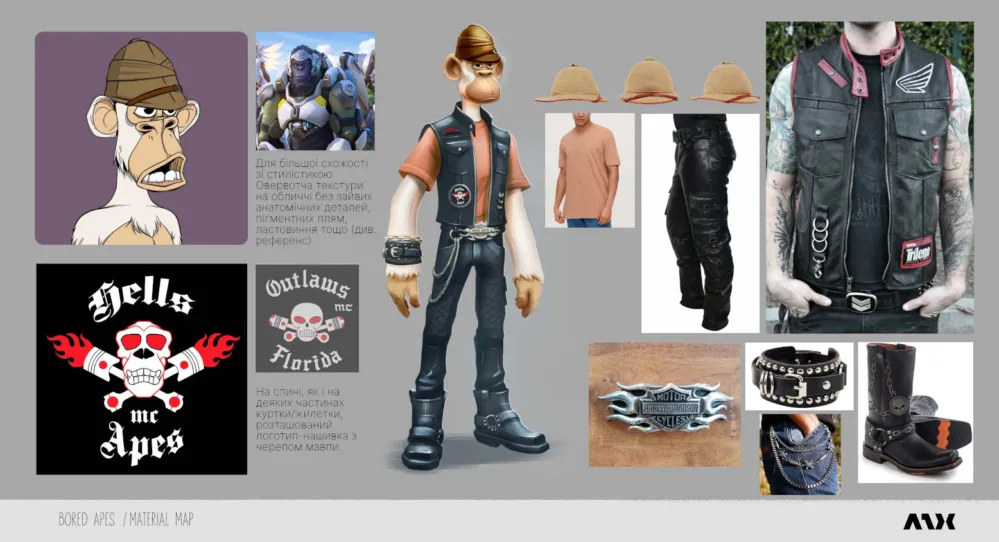
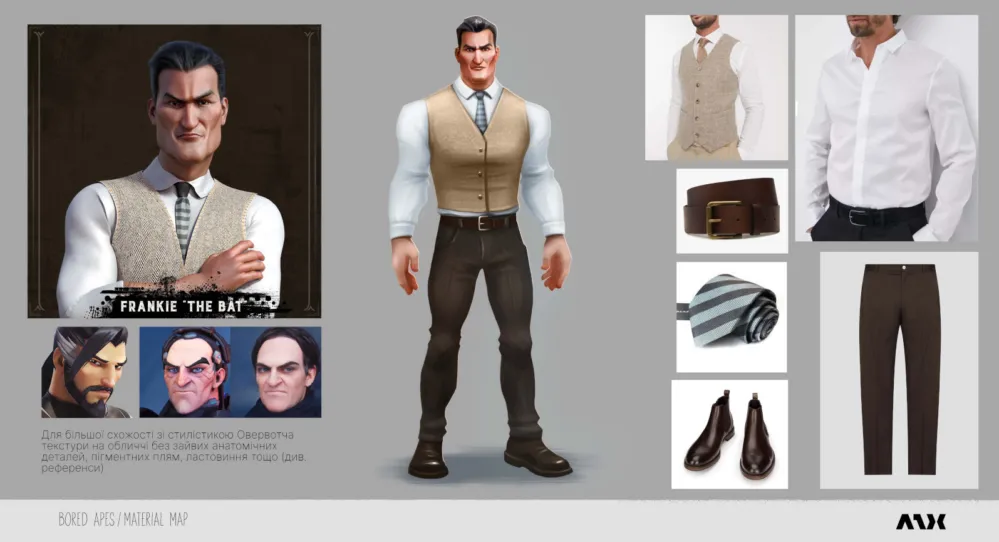
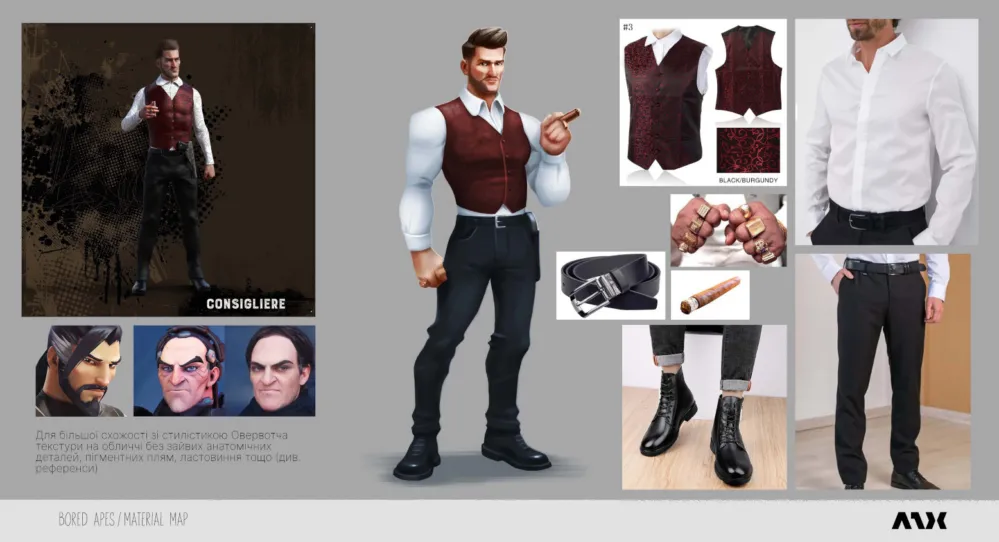
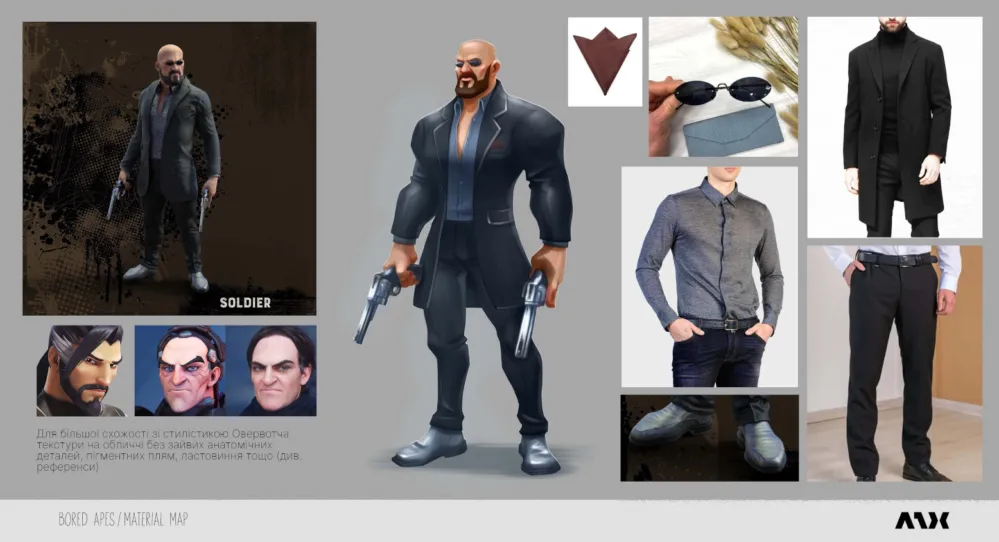
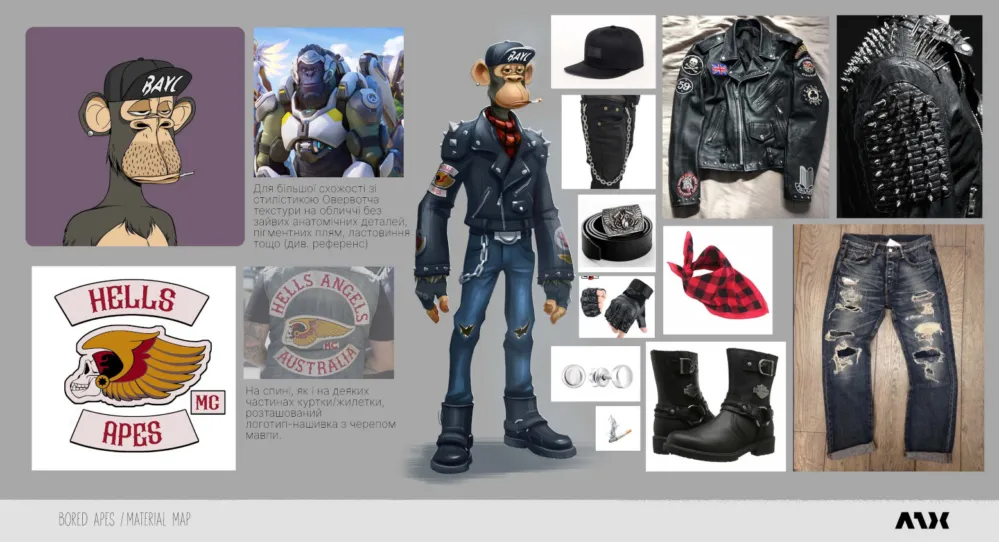
Characters material map

Monkey pilot km v001
Monkey forage km v001
Goon boss km v001
Goon cons km v001
Goon soldier km v001
Monkey cap km v001

3D modeling

The next step was 3D modelling. We split the team into two groups: one worked on the monkeys, the other on the gangsters. This helped us keep the style consistent for each type of character.

Look development

During the look development phase, we did texture and shader work on all the characters. Hair was created using meshes and textures. All shaders were created in the Redshift render engine, as we opted for it for better render quality and speed.

Rigging

Enviroment development

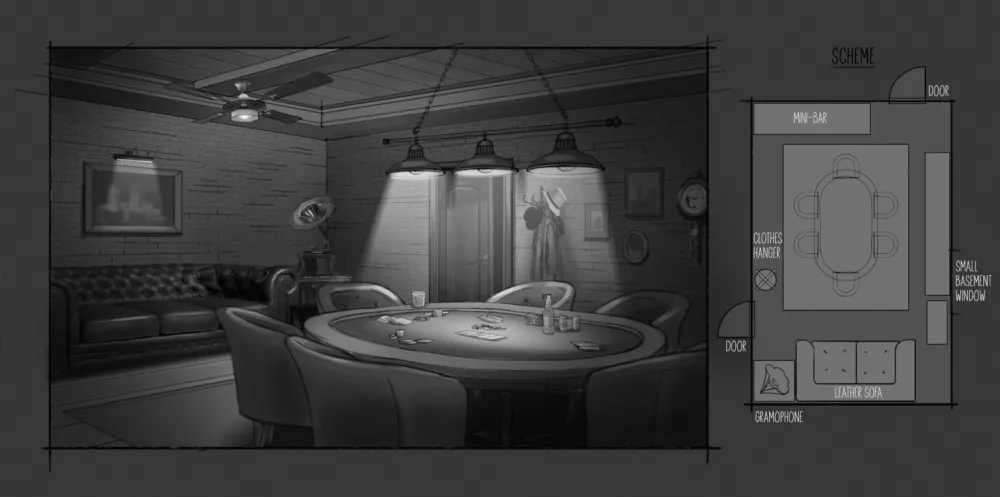
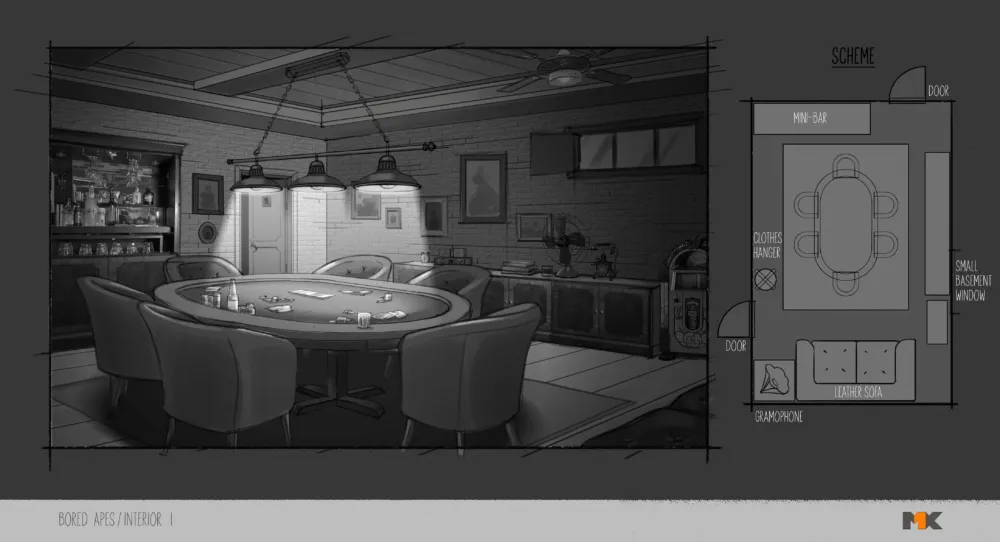
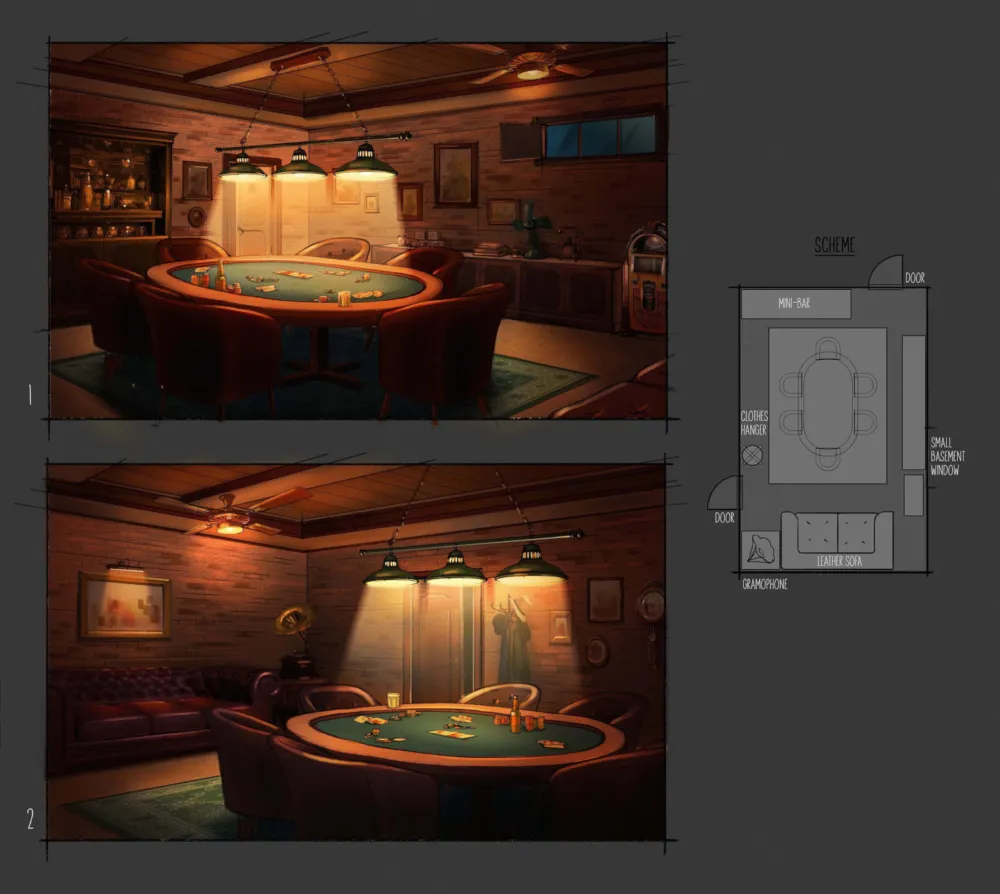
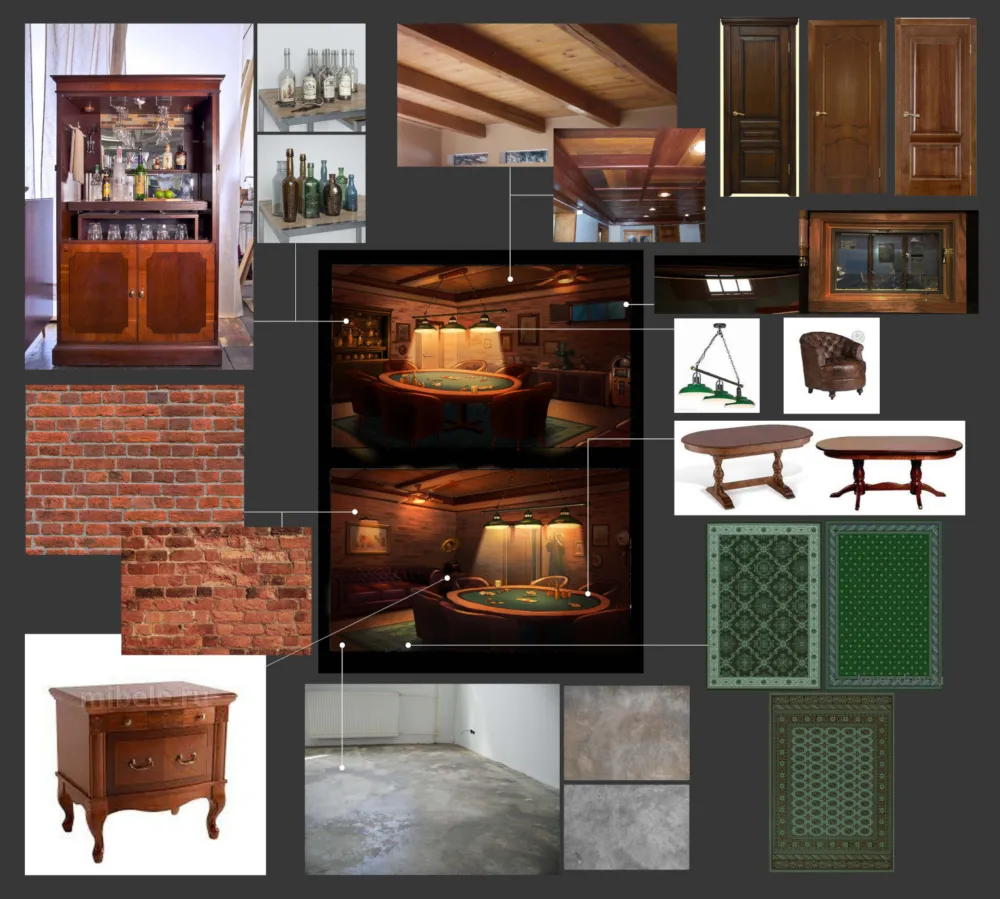
The client wanted a fairly straightforward environment and setting: the mafia playing in an underground gambling club in a basement. With that in mind, we started developing our concepts.

Concept

Gs60 interior sketch v003 copy
Gs60 interior sketch v002
Gs60 interior sketch v005 copy 1
Gs60 interior material map v001

Various art

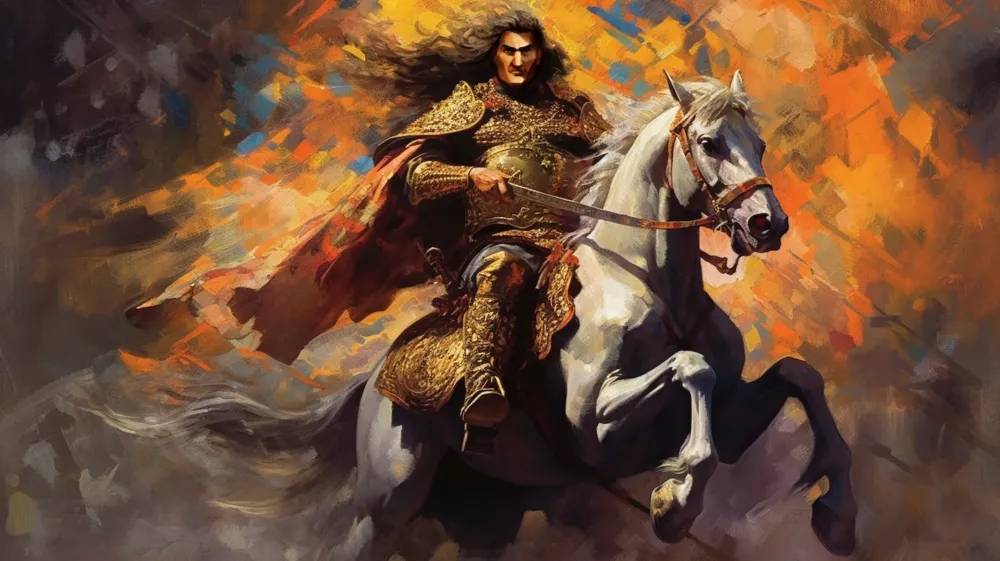
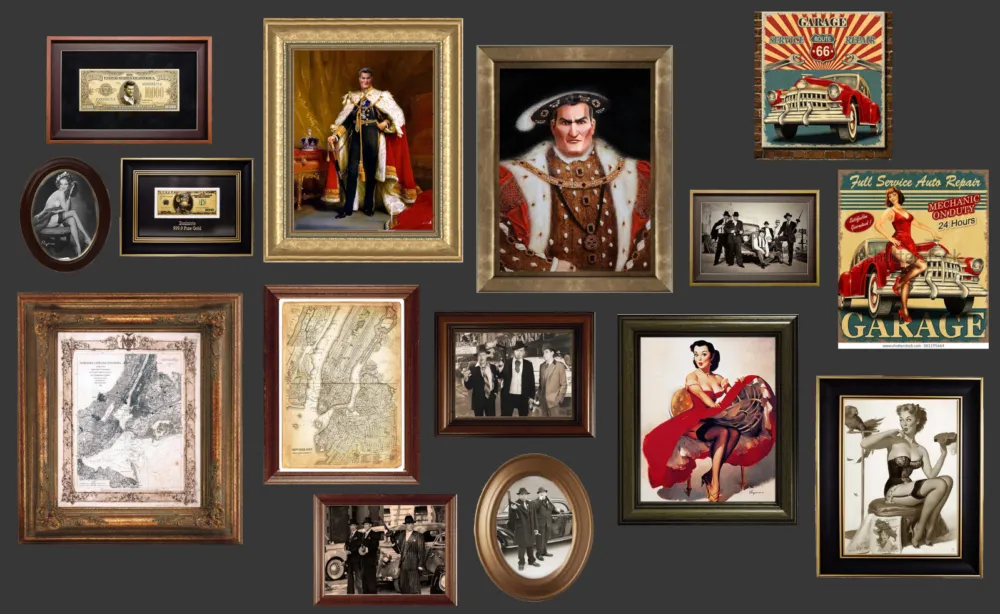
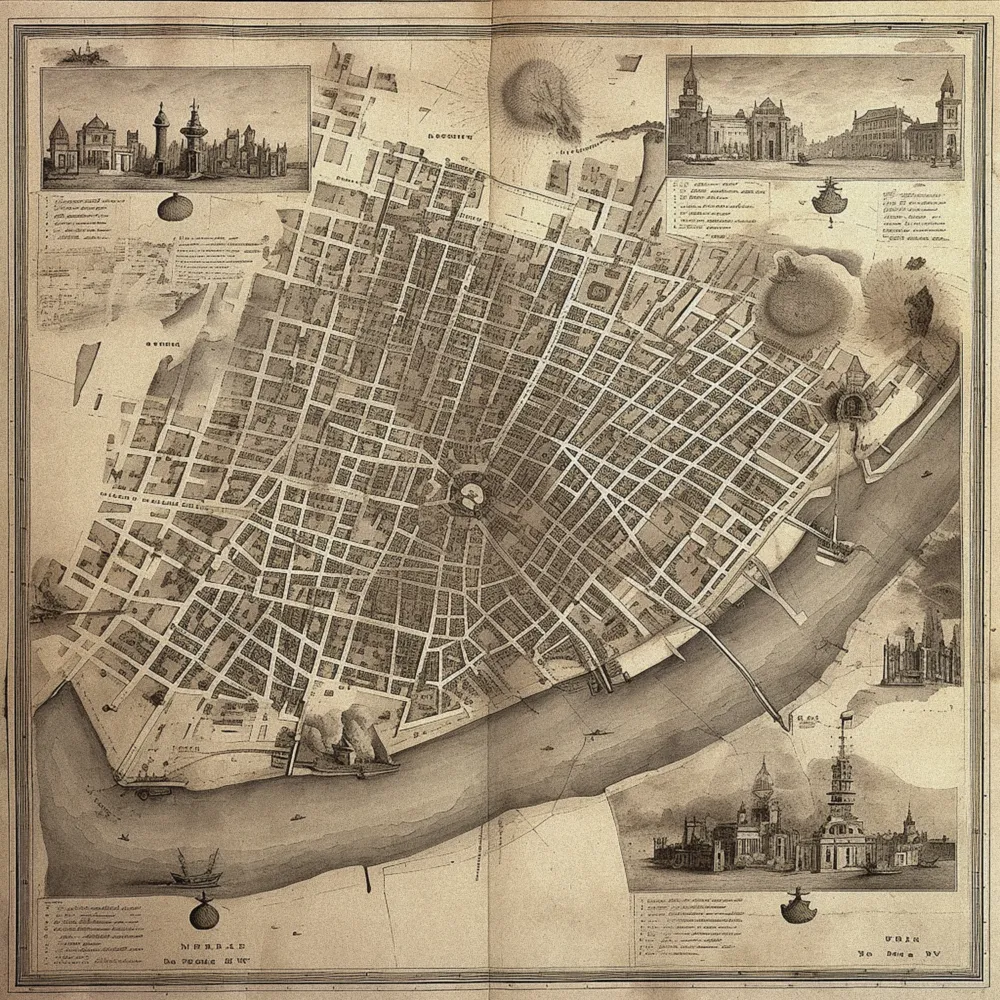
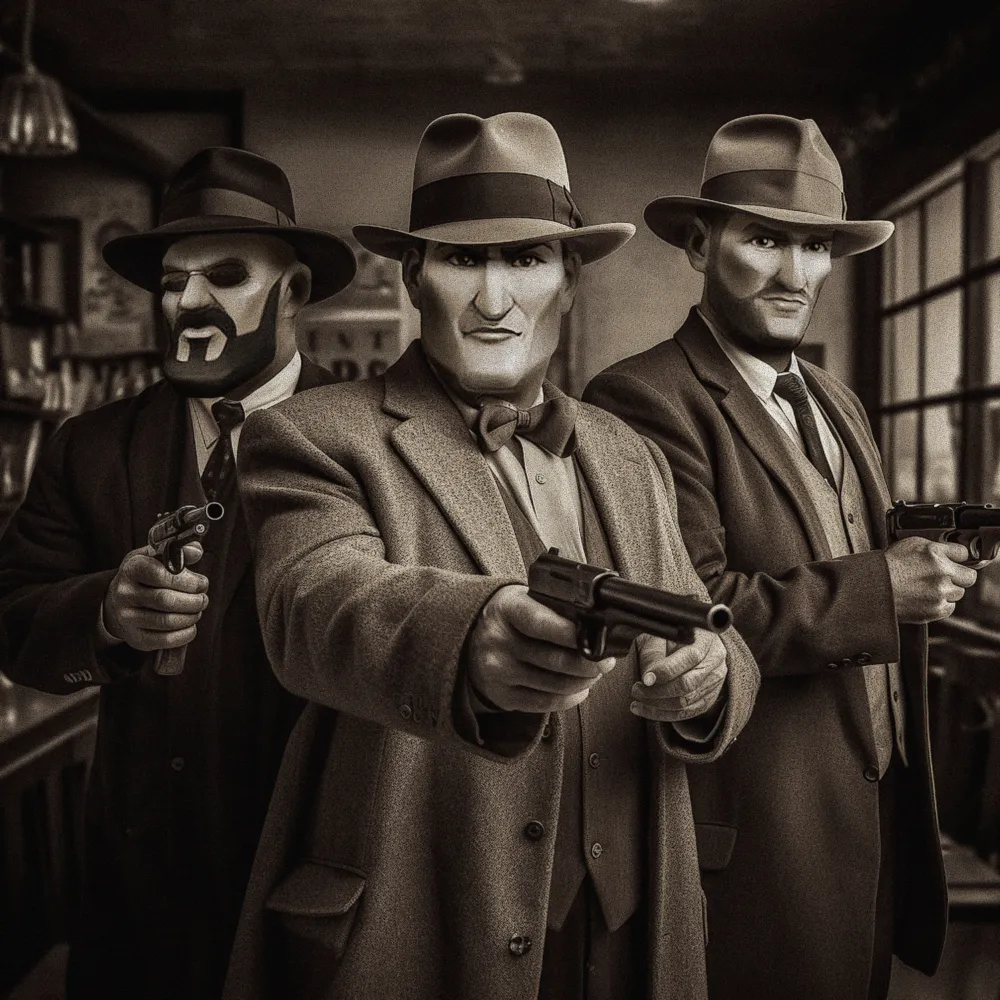
To decorate the walls with photos and artwork, we created additional scenes with our characters, stylized to look like photography and painting.

Frank king3 copy
Gs60 interior props v001 copy
Gs60 map v002
Photo v02 2 copy

Sequence development

Videomatic

In the early stages of sequence development, we decided to do something unconventional: instead of storyboards and animatics, we created a videomatic - an edit of various movies and cinematics. This greatly accelerated the process and allowed us to quickly agree with the client on the desired mood, editing dynamics, and other details that usually take much longer with the traditional approach.

Layout

As with most of these projects, we did the layout phase in Autodesk Maya. We chose this software because most of the talented directors, camera animators, riggers and character animators use it. It's an industry standard: 90% of the cinematics you see were animated in this software. The choice was obvious.

For this project, we decided to start working on the lighting and atmosphere of the scene while still in the layout stage. That's why we created previews with textures, lighting and simple lens effects. This is very helpful for the perception of the scene and its mood. Below you can see a comparison between the standard layouts of most projects on the market and our approach.

Animation

The animation phase was also done in Autodesk Maya, using the final render-ready assets. Below you can see how the characters' facial expressions, movements, and personalities improved from layout to final animation.

And of course, it took a lot of internal notes from the director to the animators to get the right result.

FX

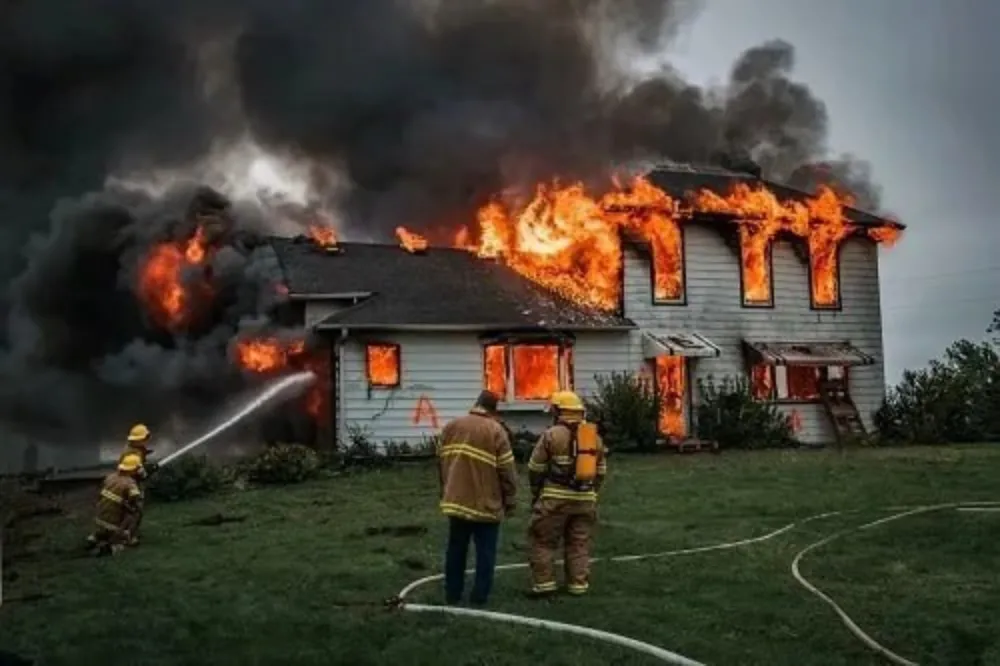
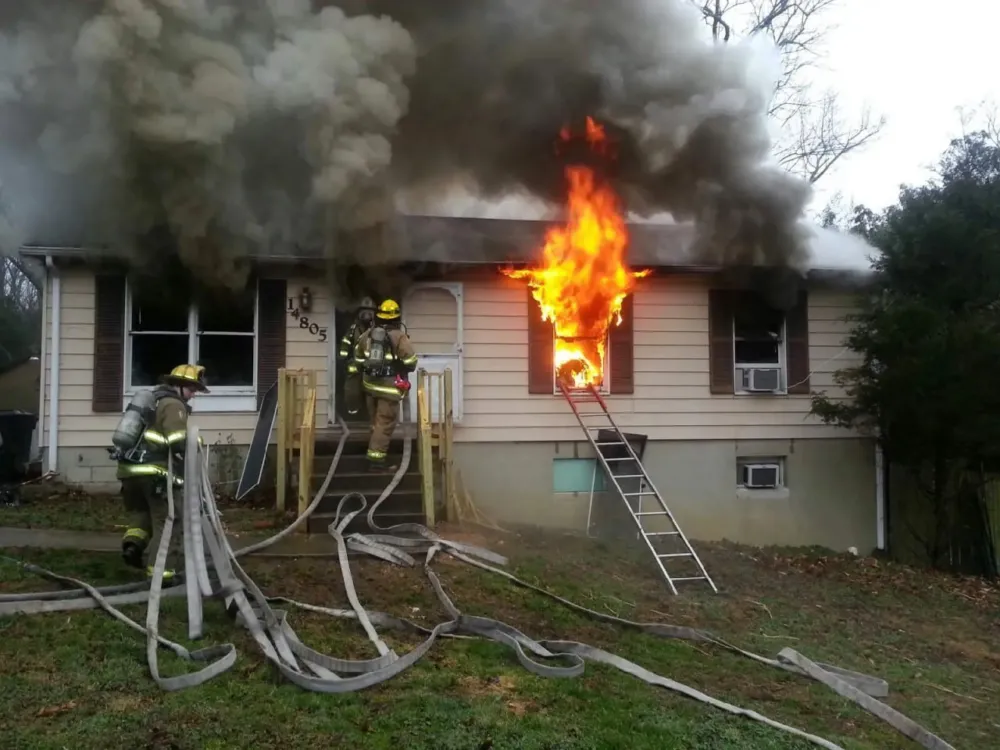
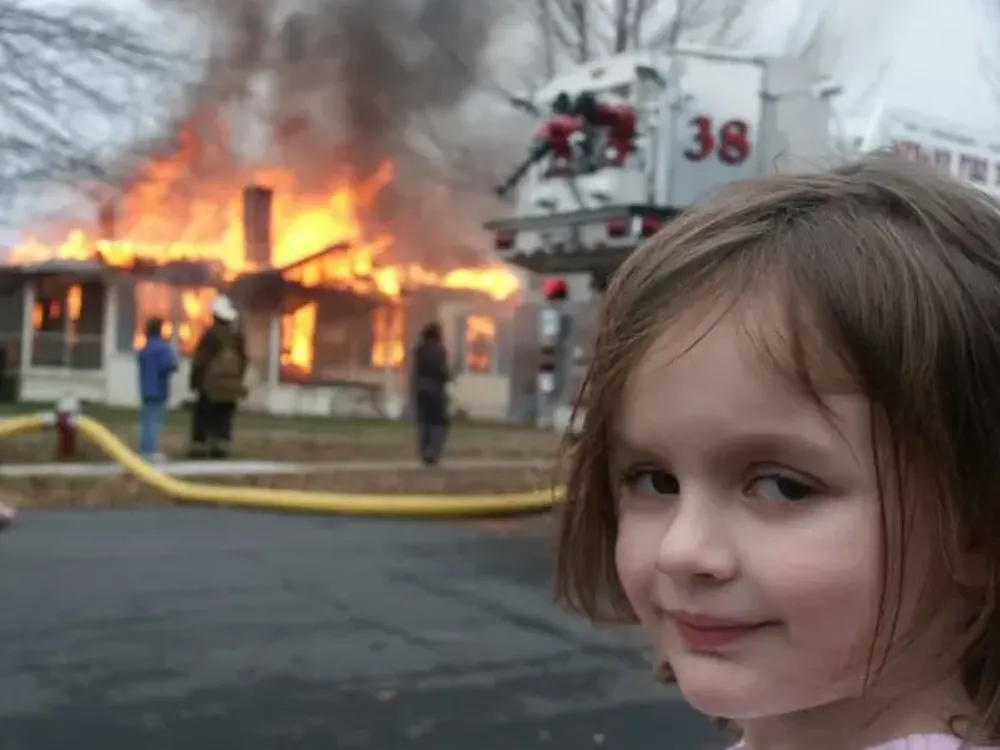
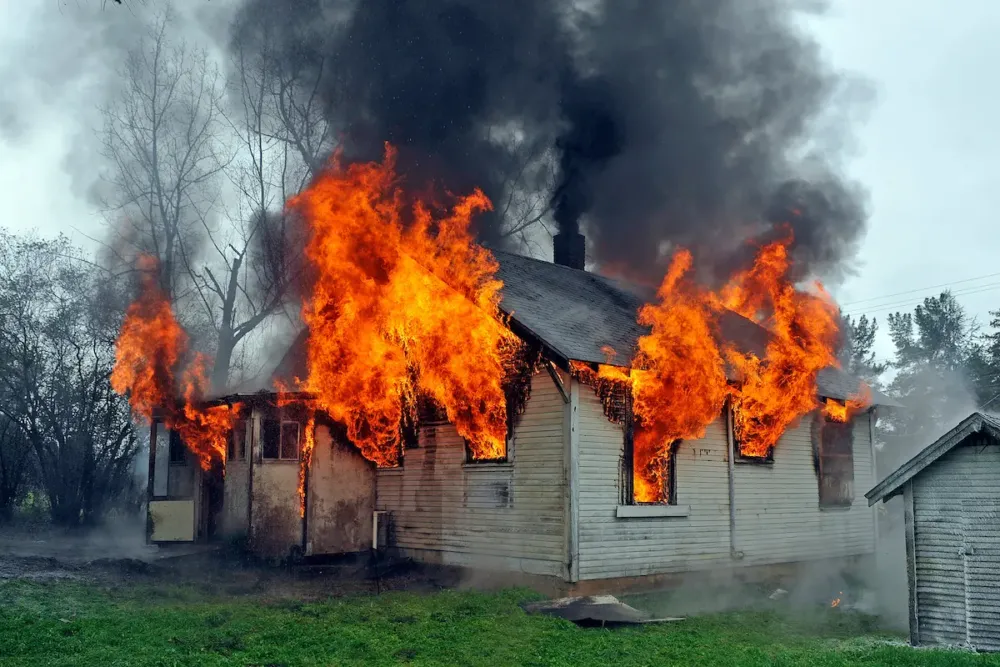
The most difficult part of this project was creating a burning building at the end of the video. According to the plot, the monkeys had a shootout in a gangster bar that ended in a fire. In the final shot, they had to walk towards the camera against the backdrop of the burning building. We started by collecting reference imagery.

Photo 2024 06 18 22 21 32
Photo 2024 06 18 22 21 30
Girl fire
House fire

Fire simulation is quite a complex process, so we had to go through many iterations and comments to get the right look. We ended up making over 20 versions before getting the right result.

The final result looks like this:

We also created simulations of cigarette smoke and chips scattering when the boss flips the table. These tasks were simpler and more predictable, but still required a lot of work.
Lighting/Look Development

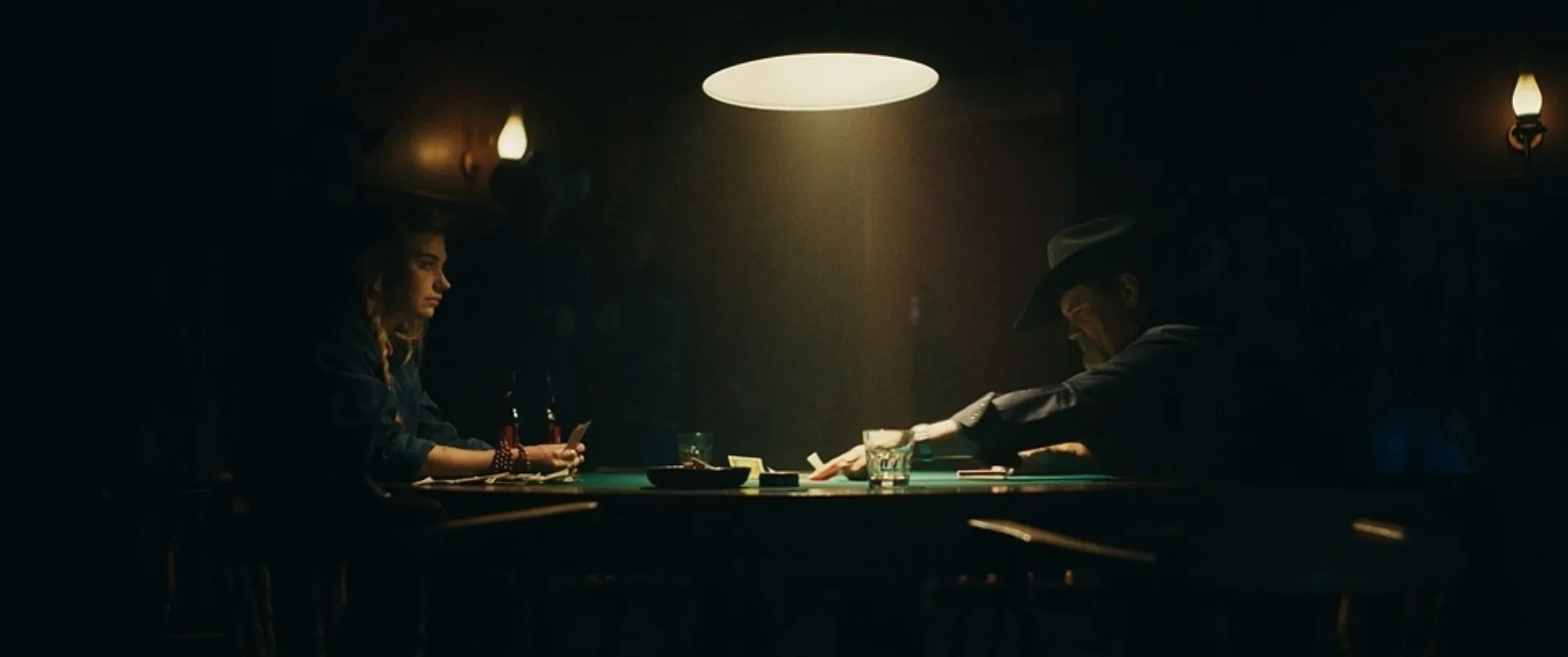
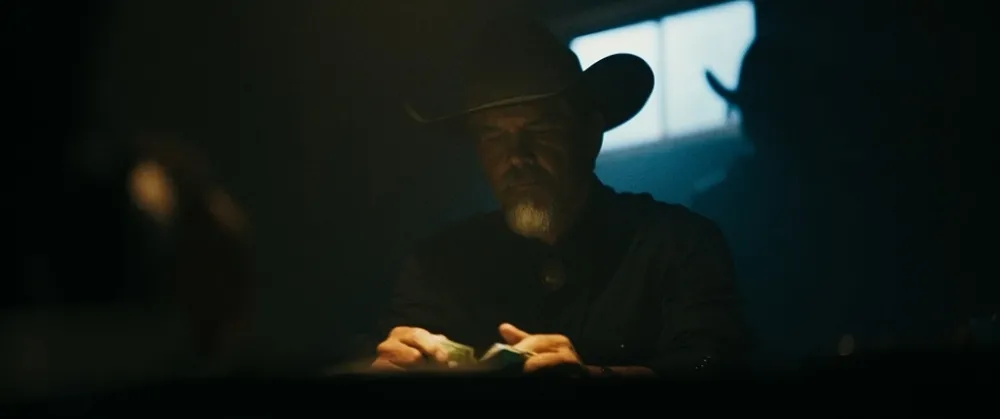
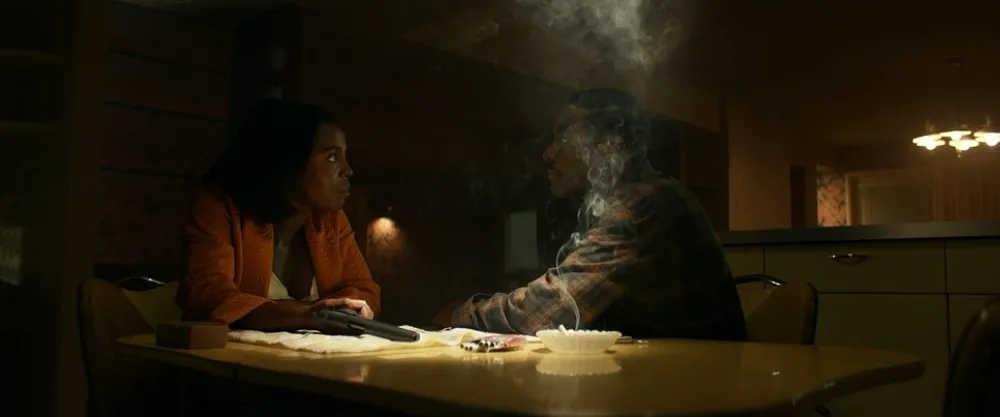
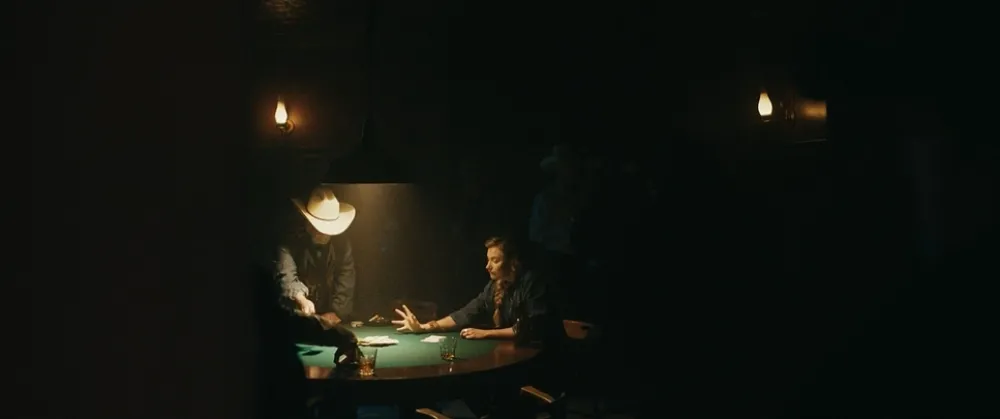
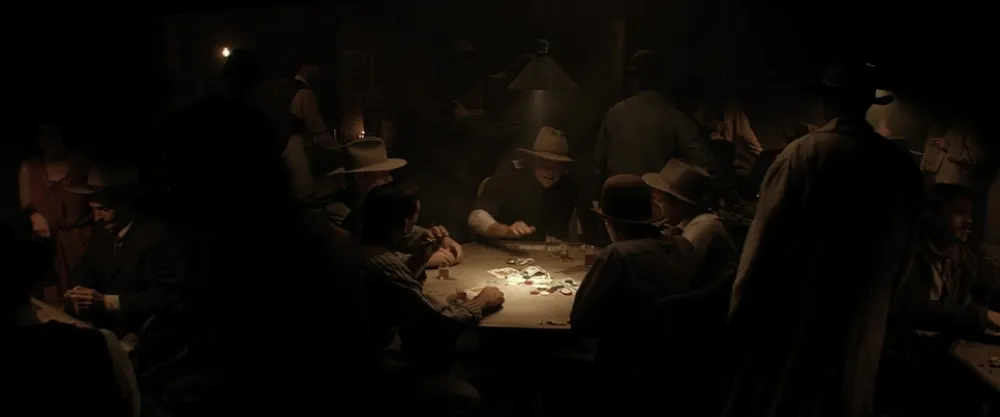
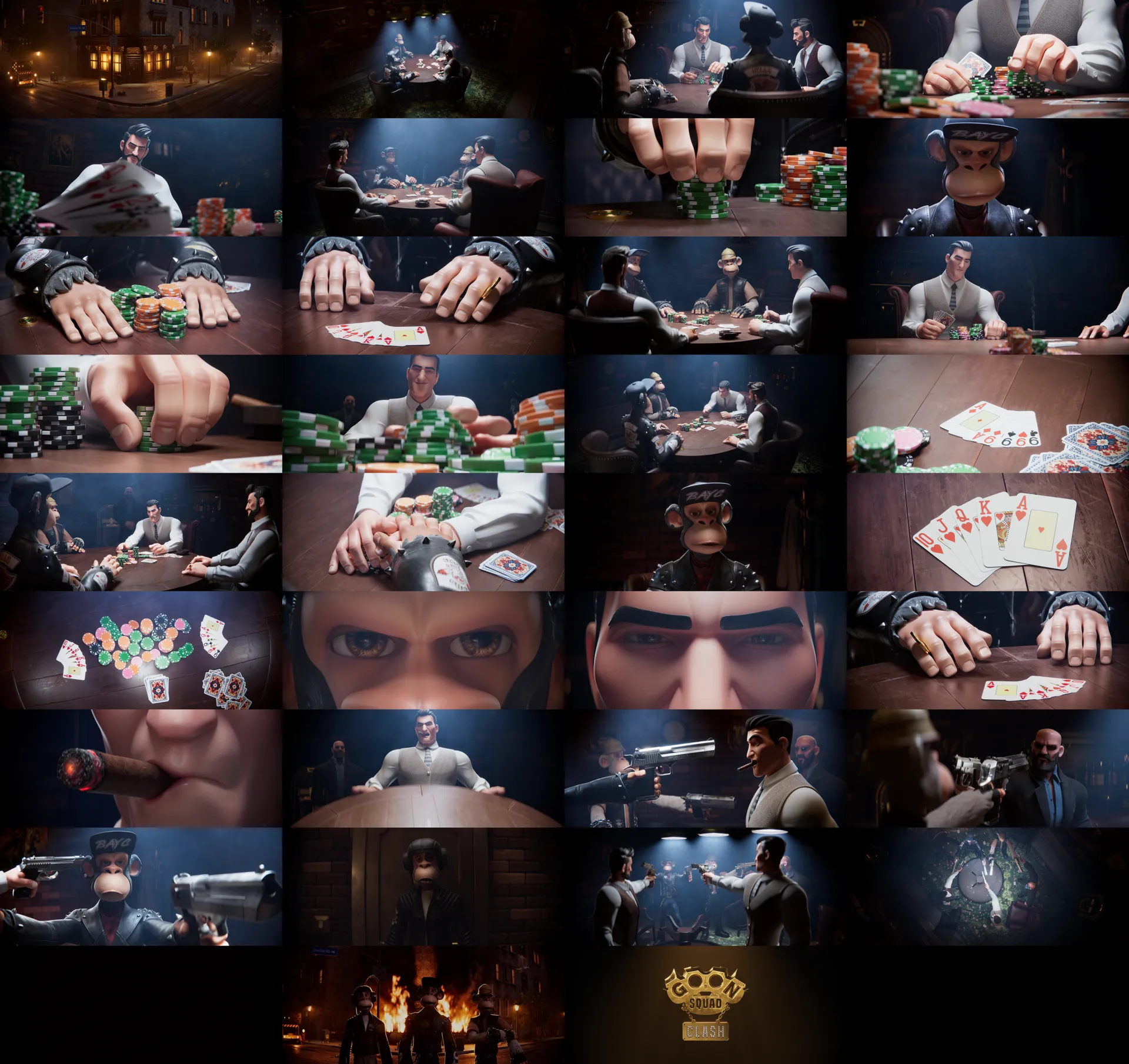
We started the lighting phase by selecting references in terms of mood and light. The task was to create the feeling of a dark, gloomy and unsafe place where monkeys play poker with gangsters. The atmosphere had to be uncomfortable and tense, almost like an interrogation. So we chose a top light with a muted atmosphere around it.

Small JI73 N8 PN
Small 2 GQIKQ4 R
Small AK0 W7 YNW
Small MKN5 P1 OZ
Small NLNPAO9 T
Small SUGHHEQQ
Small WSHDMAL4

We had a lot of shots, and it was important to keep the same atmosphere and lighting in all the scenes. To do this, we used a spreadsheet to control each shot so that none of them would be out of the general mood.

Lookdev review v004

Compositing

Compositing was done in Nuke, which is an industry standard, so it was an obvious choice. Rendering was done in Redshift: we rendered the foreground and background separately, each with their own passes for further compositing. We used HAWK V-lite anamorphic lenses with their distinctive aberrations, vignetting and distortion to create the lens effects. The universal master script we created was given to all the compositors so that the work was laid out in the same way. This ensured that all shots looked the same, no matter who was compositing them.

Start a Project

Please fill the form below